
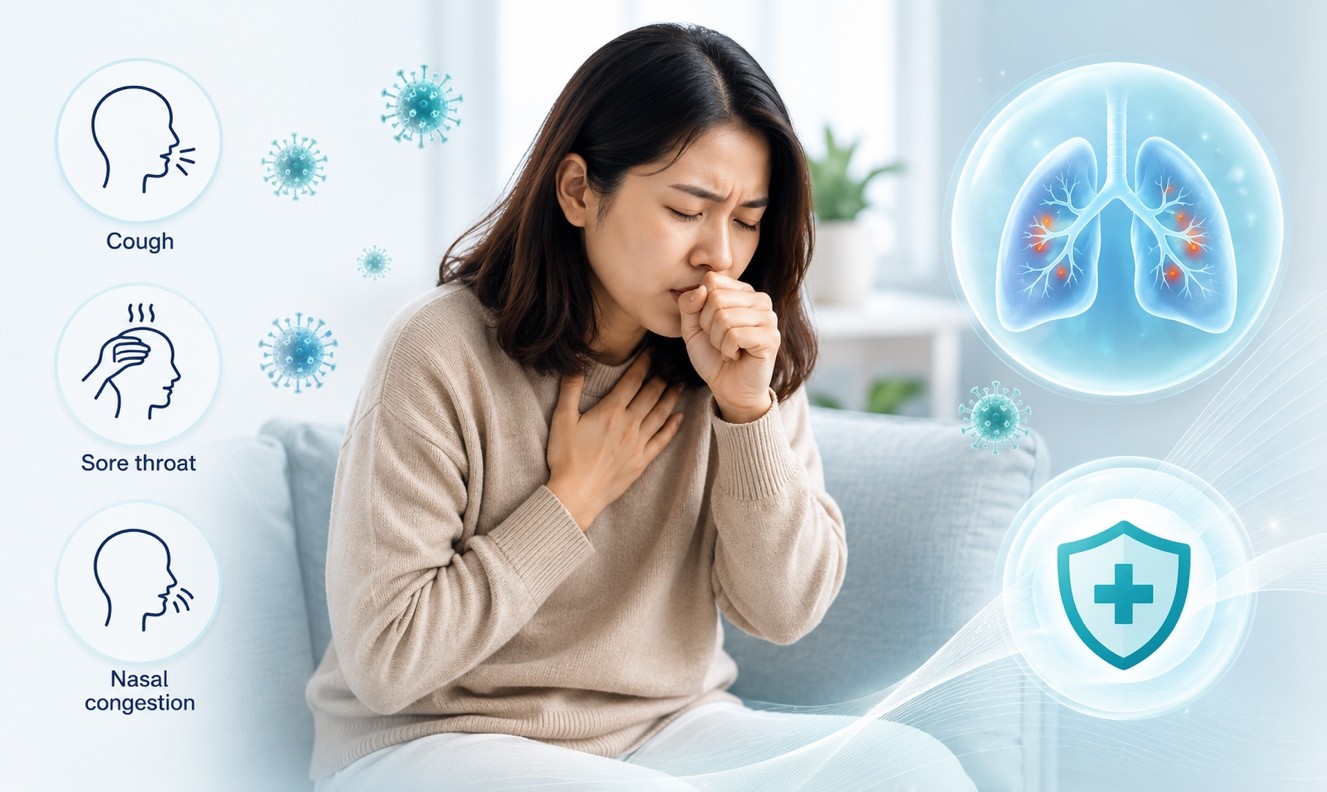
Respiratory Infections Remain a Common Health Concern in Singapore
In Singapore’s densely populated urban environment, respiratory infections such as upper respiratory tract infections (URTI), influenza, and COVID-19 remain highly common. While many people recover within days or weeks, some continue to experience lingering fatigue, weaker immunity, or repeated infections even after symptoms appear to resolve.
At the same time, tuberculosis (TB) continues to remain an active public health concern in Singapore. In 2026, health authorities identified new TB clusters in Bedok, reinforcing the importance of maintaining strong respiratory health and immune resilience – especially in crowded environments.
These developments highlight an important reality:
Respiratory health is not only about fighting infections, but also about how well the body recovers afterward.

Many people assume that once symptoms improve, the body has fully recovered.
However, modern research suggests that recovery may continue long after:
- fever subsides
- cough improves
- COVID tests become negative
As a result, some individuals may become more vulnerable to:
- repeated URTI
- prolonged recovery
- weakened immune resilience
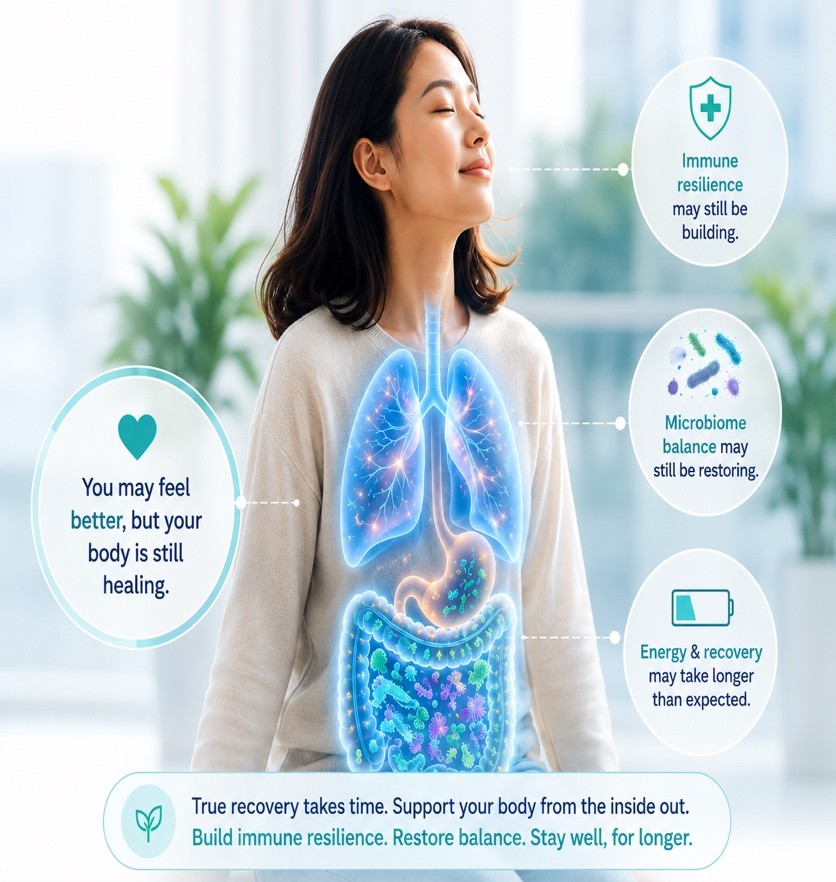
This may help explain why:
- some people bounce back quickly,
- while others continue to “fall sick easily” after respiratory infections.
The Emerging Science of the Gut–Lung Axis
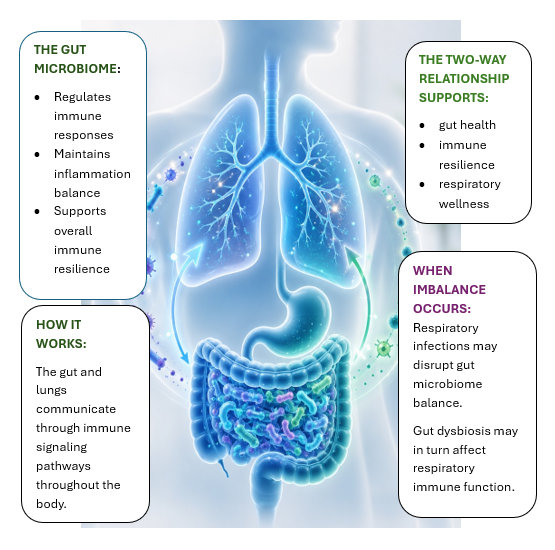
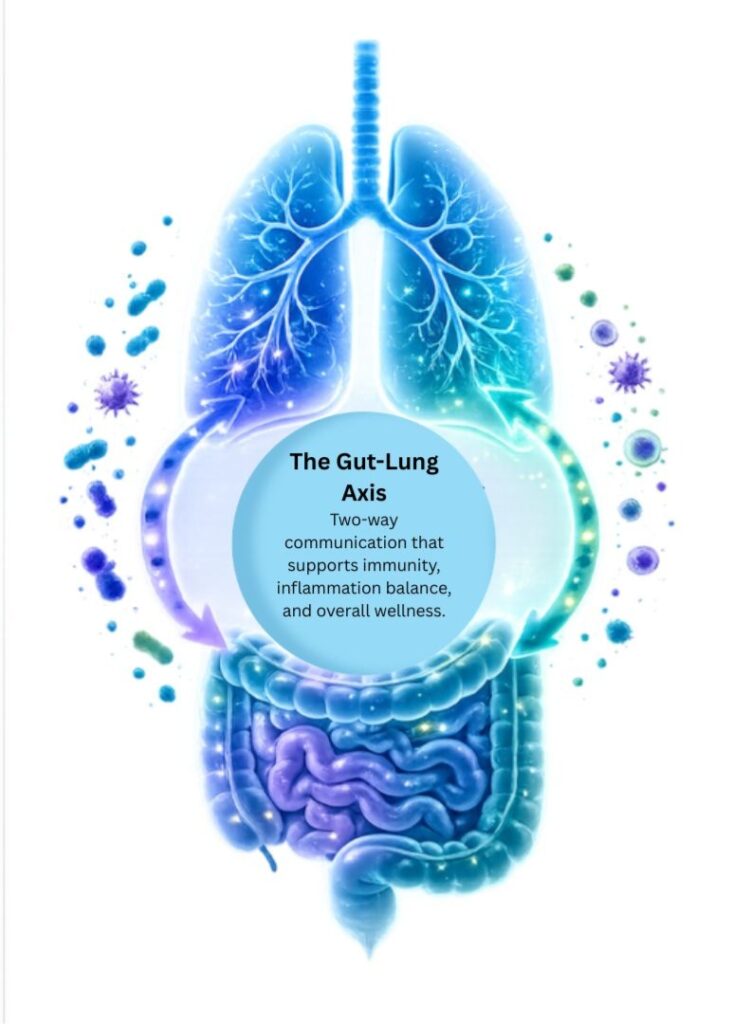
In recent years, scientists have discovered a strong connection between the gut microbiome and lung health – known as the gut–lung axis.
Why Immune Resilience Matters More Than Ever

In modern urban environments like Singapore:
- crowded public spaces
- frequent travel
- workplace exposure
- repeated viral circulation
can place ongoing stress on the immune system.
While conventional approaches focus on:
- symptom relief
- antibiotics
- antivirals
there is growing interest in complementary approaches that support:
- microbiome balance
- immune recovery
- long-term resilience
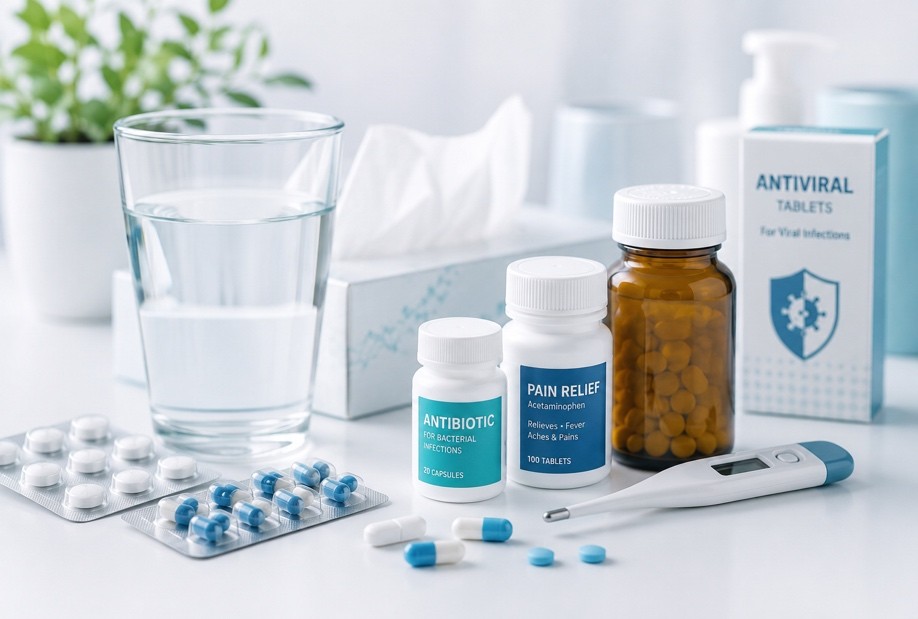
The focus is gradually shifting from simply treating infections toward supporting the body’s overall recovery and immune foundation.
A Precision Microbiome Approach
Newer microbiome-based formulations are now being developed using:
- metagenomic analysis
- disease-specific microbiome insights
- precision strain selection
One example is G-NiiB Immunity+ (SIM01), a precision microbiome formulation developed using microbiome research and AI-assisted strain selection technology.
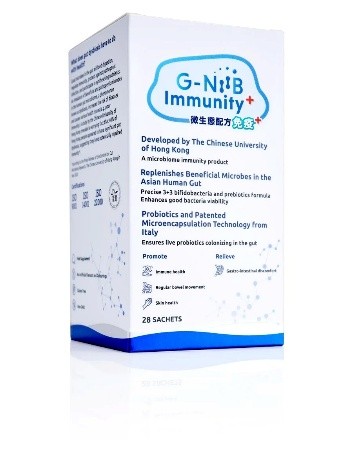
Unlike conventional probiotics that generally provide broad bacterial support, precision microbiome formulations are designed to support targeted microbiome restoration and immune balance.
SIM01 is formulated to:
- support gut microbiome balance
- support immune health
- support post-illness recovery
- reinforce the gut–lung axis
This represents a more holistic approach toward supporting immune resilience after respiratory stress.
The Bigger Picture: Supporting Long-Term Wellness
Respiratory infections may be unavoidable at times, especially in highly connected urban environments.
However, recovery should not only focus on:
- symptom resolution,
but also on: - restoring balance
- rebuilding resilience
- supporting long-term wellness
As understanding of the gut–lung axis continues to evolve, microbiome-focused approaches may play an increasingly important role in supporting immune health and recovery in everyday life.
Conclusion
Singapore’s recent respiratory health developments serve as an important reminder that immune resilience matters.
The conversation is no longer only about infection control – it is also about how well the body recovers and adapts afterward.
Emerging microbiome science suggests that supporting the gut microbiome may help strengthen the body’s overall immune foundation through the gut–lung axis.
Innovations such as G-NiiB Immunity+ SIM01 reflect this growing shift toward:
- restoring microbiome balance,
- supporting immune resilience,
- and promoting long-term respiratory wellness.